

We don’t compromise – even when it’s more convenient to do so
It’s easy to take the convenient route.
Plastic bottles are cheaper, lighter and more practical to transport. Most manufacturers of liquid supplements do exactly that. It has become the industry standard.
We made a different choice from the very beginning. Every one of our products is filled and sealed in protective glass bottles — never plastic. This is not a temporary trend or a marketing tactic. It is a principle we decided on before Rgenic even existed, and one we continue to uphold even when it costs more and takes more effort.
Why plastic is problematic for liquid supplements
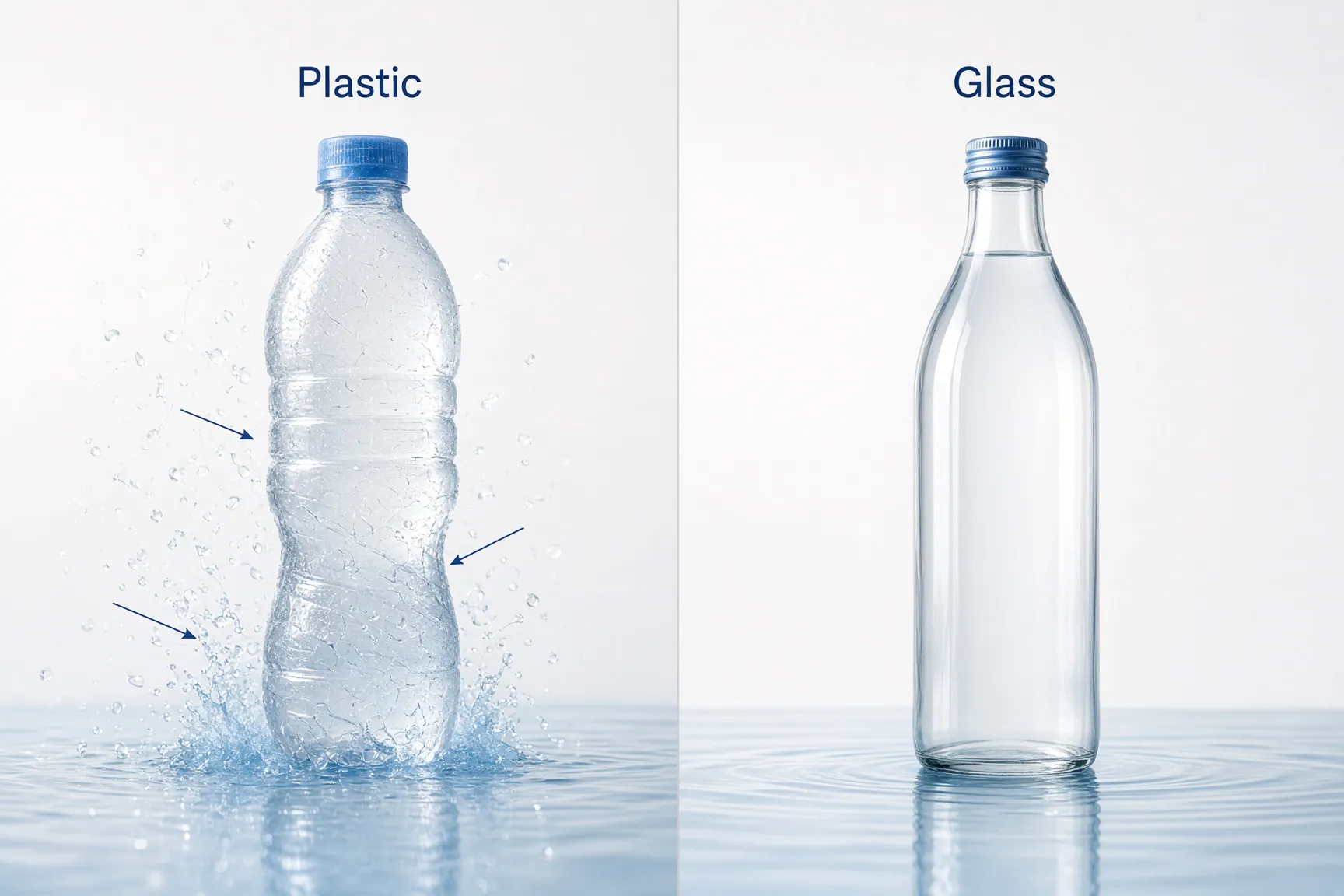
Liquid products have a much longer contact time with the packaging than tablets or capsules. The longer a liquid sits in plastic, the greater the risk that small particles and substances from the material transfer into the contents.
Microplastics are no longer an abstract environmental issue. They are present in the air, in water and in food. Studies have shown that we ingest them daily, and that they can enter the body. When you take a liquid supplement every day, you don’t want the packaging itself to add to that load.
Plastic can also be affected by temperature changes, light and time. Even if the bottle looks intact, microscopic particles and residual substances can migrate into the product. This is a risk we are not prepared to take — neither for our customers nor for our own standard.
Glass is not just a material. It is protection.
Glass is inert. It does not react with the contents. It does not release microplastics and does not affect the purity of what is inside. That is why we choose it, even though it is heavier, more expensive and more demanding to handle.
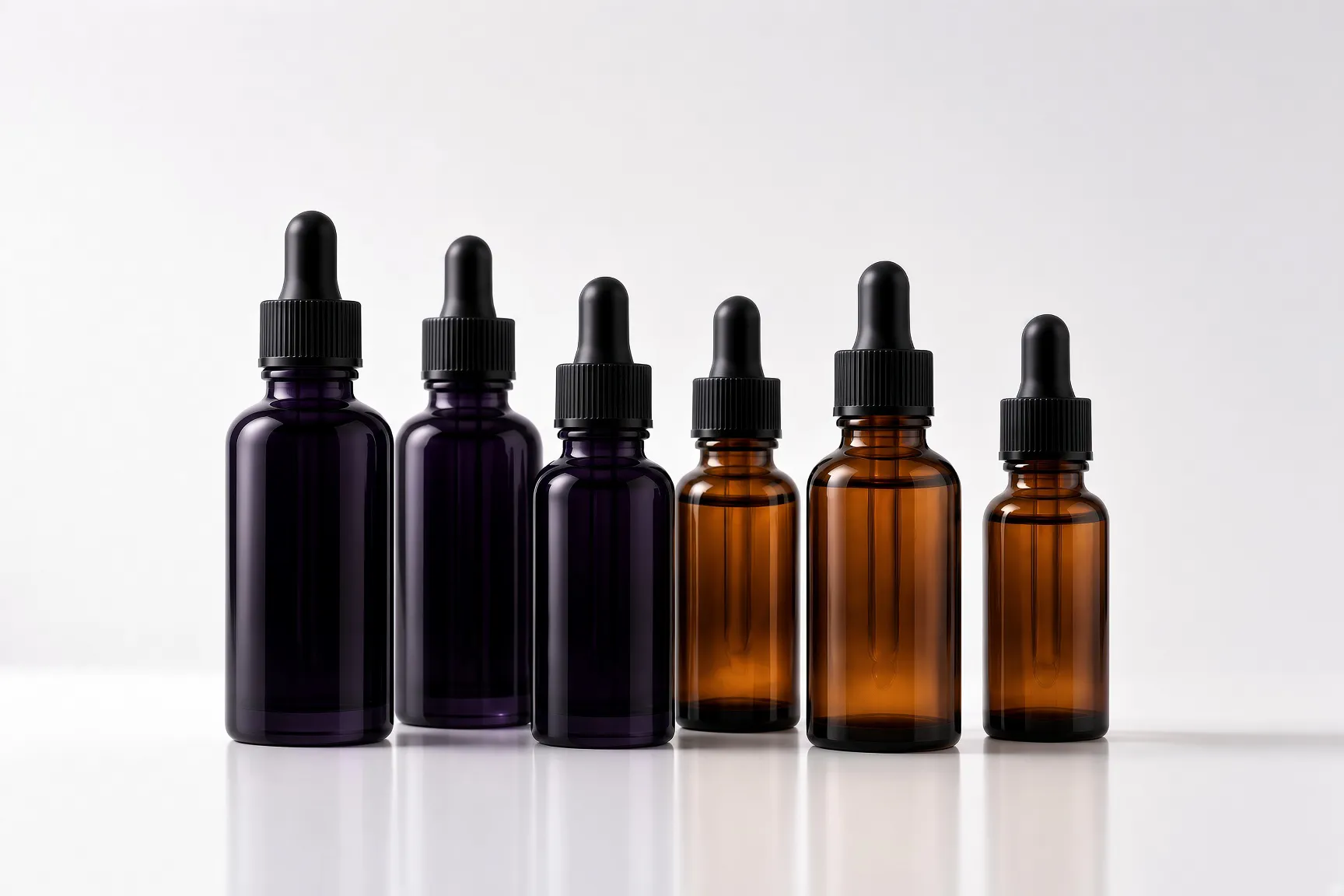
We also use protective violet glass. It filters out certain wavelengths of light that can degrade sensitive compounds, while allowing other wavelengths to pass through. The result is a more stable product over time — without the need to add unnecessary preservatives or stabilisers. This is part of the same mindset: do it right from the start, so you don’t have to fix it later.
Uncompromising purity is about more than the ingredients
When we say “uncompromising pure standard”, we don’t just mean the raw materials we choose. We mean the entire chain — from how we blend the product to how it is packaged and protected until it reaches you.
- Every batch is tested for purity.
- We use distilled water of the highest purity.
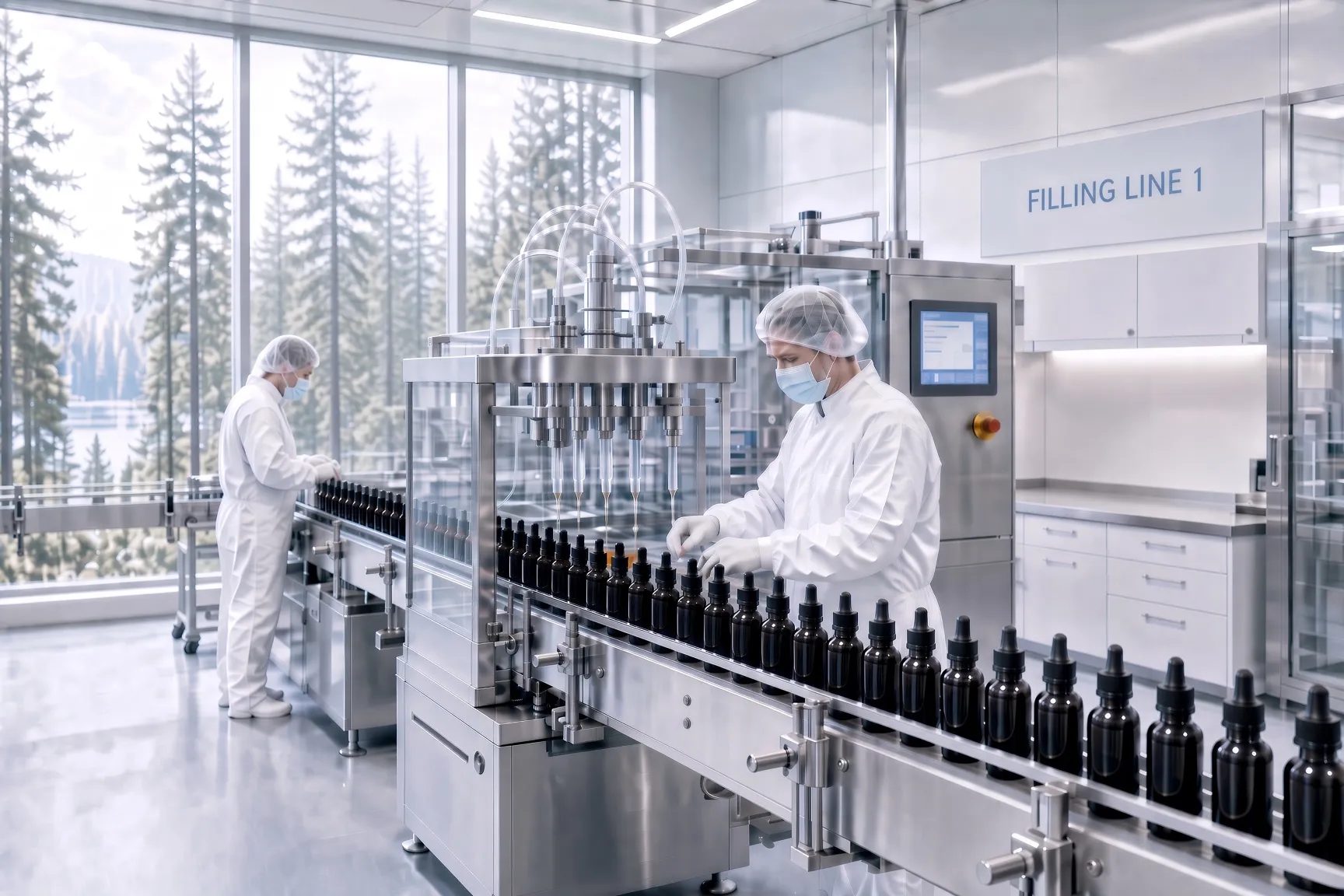
- We manufacture in-house in Sweden under strict regulations.
- We never put the product in plastic, even if it would be easier and cheaper.
Many brands adapt to trends. When microplastics suddenly become a major topic in the media, some start switching materials. Others add an “eco version” alongside the regular one. We don’t need to make that change — because we made the choice before it became popular.
Convenience is not the same as quality
It is understandable that many choose plastic. It feels practical. The bottles are easy to ship, easy to carry and cheaper to produce. But convenience must never come before what actually ends up in the body.
We believe that anyone taking a liquid supplement does so to add something positive — not to simultaneously ingest something they don’t want. That is why we refuse to compromise on the packaging. It is more expensive for us. It requires more from logistics and handling. But it delivers a product that meets the standard we ourselves want to stand behind.
Purity is a system, not a single action
Avoiding plastic is only one part. It is connected to how we select raw materials, how we blend, how we test and how we protect the final product. Everything is interconnected.
Once you start compromising in one place, it becomes easier to compromise in the next. That is why we decided not to start.
Protective glass. Never plastic.
Tested for purity. Batch after batch.
Pure. Stable. Nothing unnecessary.
It is not the easiest path.
But it is the one we believe is right.
References
- Qian N, et al. (2024). Rapid single-particle chemical imaging of nanoplastics by SRS microscopy. Proceedings of the National Academy of Sciences. https://www.pnas.org/doi/10.1073/pnas.2300582121
- Muhib MI, et al. (2023). Occurrence of microplastics in tap and bottled water, and food packaging: A narrative review on current knowledge. Science of the Total Environment. https://www.sciencedirect.com/science/article/abs/pii/S0048969722083784
- Bach C, et al. (2013). Effect of temperature on the release of intentionally and non-intentionally added substances from polyethylene terephthalate (PET) bottles into water. Food Chemistry. https://www.sciencedirect.com/science/article/abs/pii/S0308814613000708
- Singh T, et al. (2021). Generation of microplastics from the opening and closing of plastic water bottles. Journal of Water and Health. https://iwaponline.com/jwh/article/19/3/488/81464
- Miron Violetglass – Technical information on biophotonic protection and light filtration. https://www.miron.com/
- European Food Safety Authority (EFSA) – Materials in contact with food and food supplements. https://www.efsa.europa.eu/